VERDANT OASIS | residential | apartment building
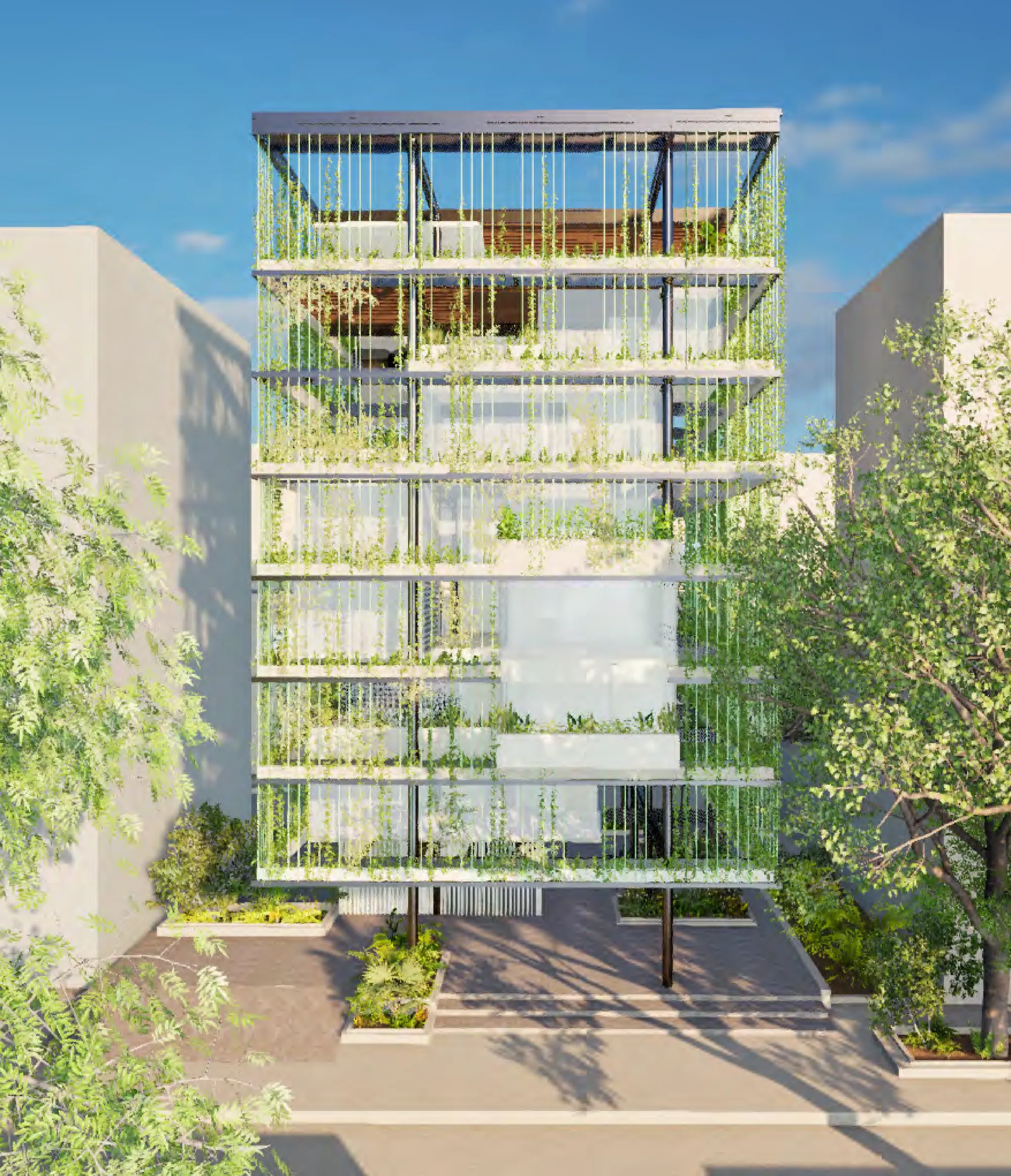
Situated in La Carlota’s Main Avenue, in a corner-adjacent through-lot, the proposal focuses on the development of a residential building that responds to the urban conditions of the site whilst exploring potential transformations of the local surroundings through the building’s typology.
Emphasizing the relevance of local context in the design process — and considering how it both influences and is influenced by the buildings in it — the project is shaped by the defining characters of the site, creating a residential building that aims to extend the greenery of the pedestrian boulevard into the proposal, providing a natural respite from the hustle and bustle of the city whilst promoting transversality and pedestrian connectivity.
THE VERTICAL GARDEN
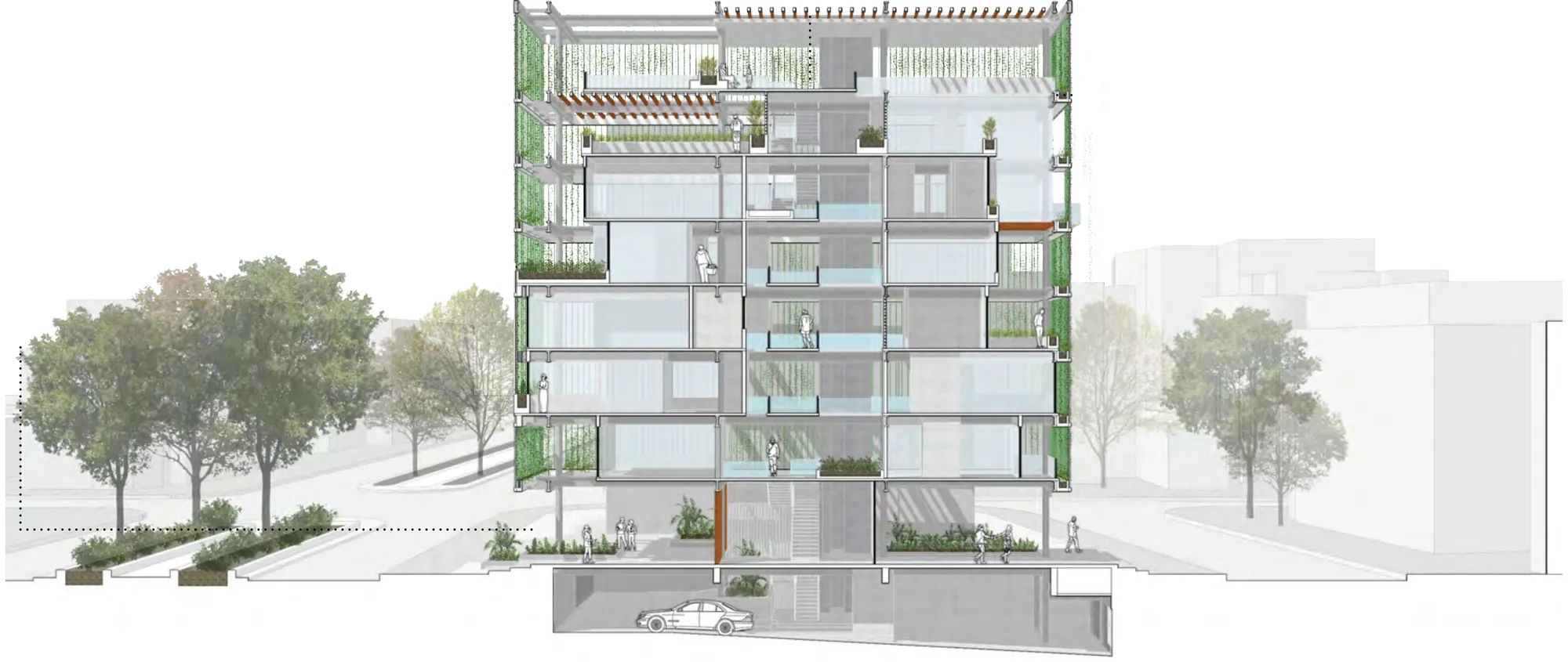
The proposal reimagines the typical condition of the apartment buildings of Caracas by adapting elements of the suburban house — such as nature, backyards, and a tranquil environment — into a vertical building. Drawing from built references like the MFO Park, the Pérez Art Museum and Fujimoto’s N House, the project seeks to create a dynamic sequence of indoor and outdoor spaces throughout the building.
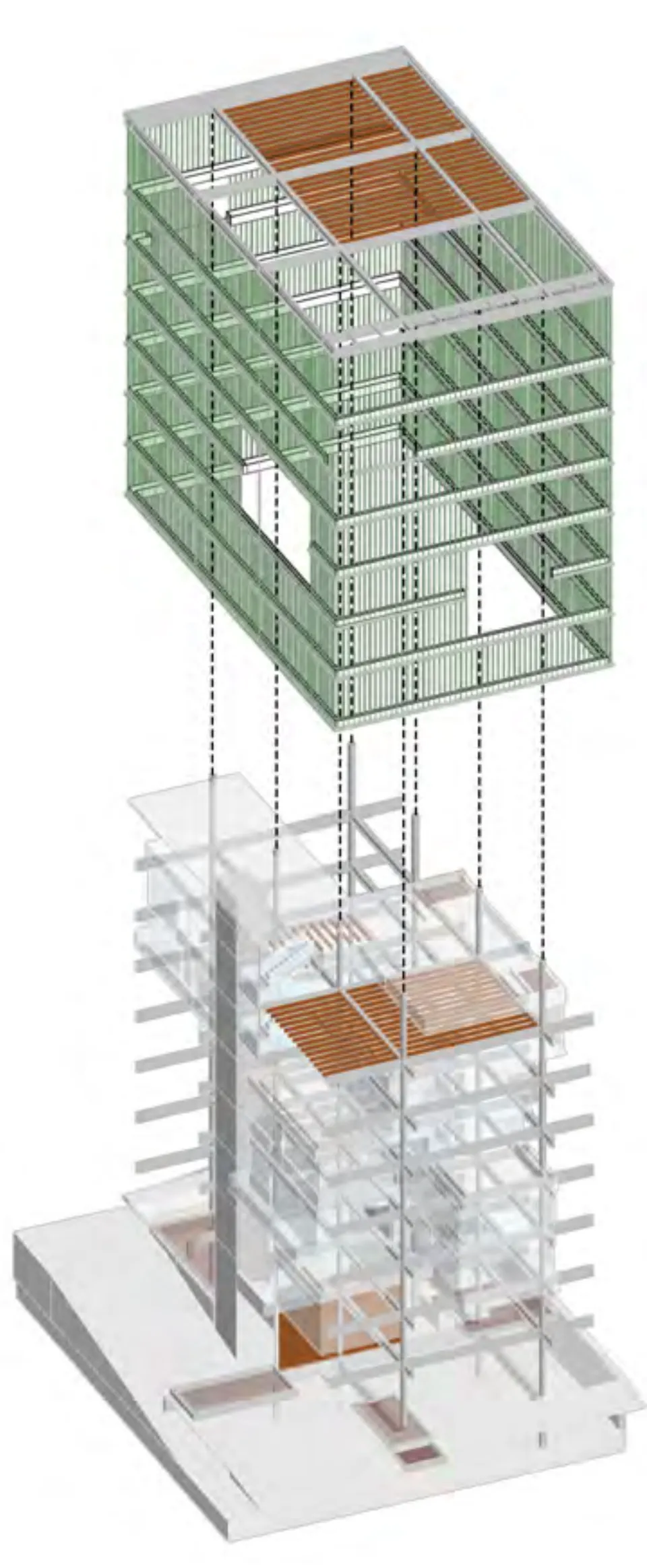
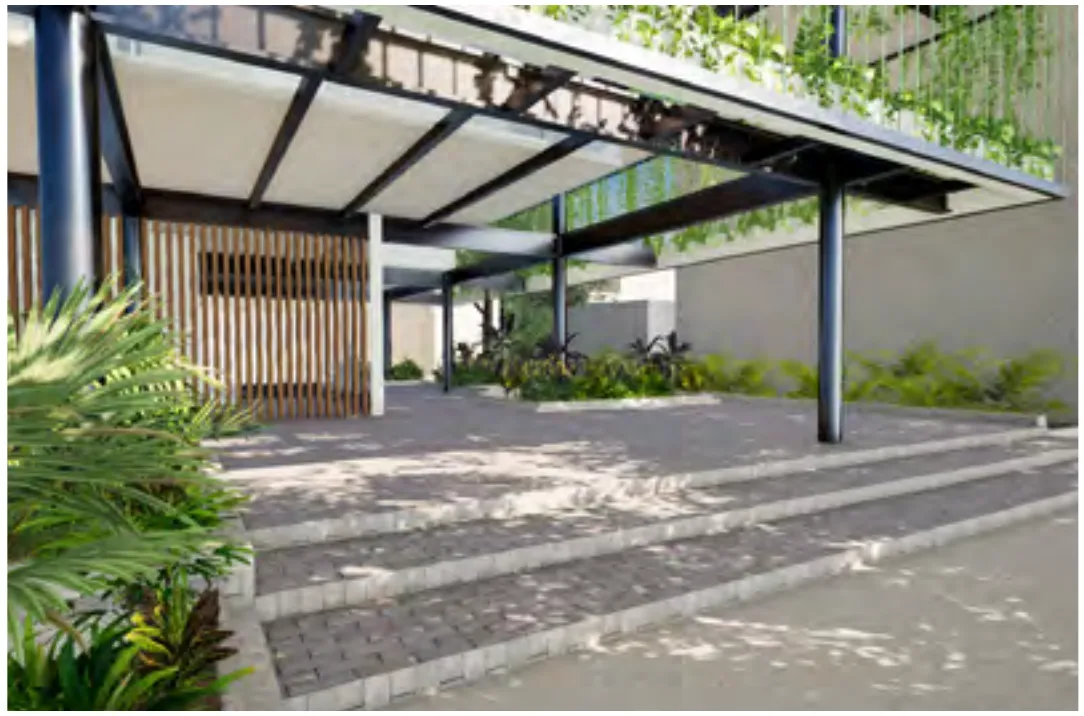
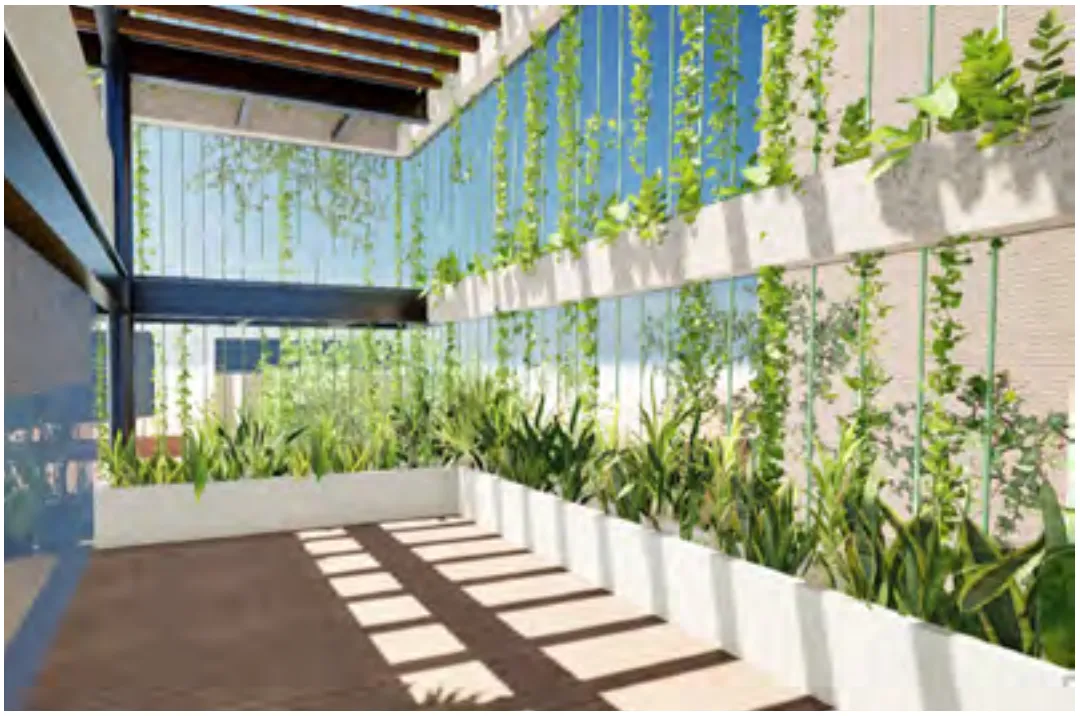
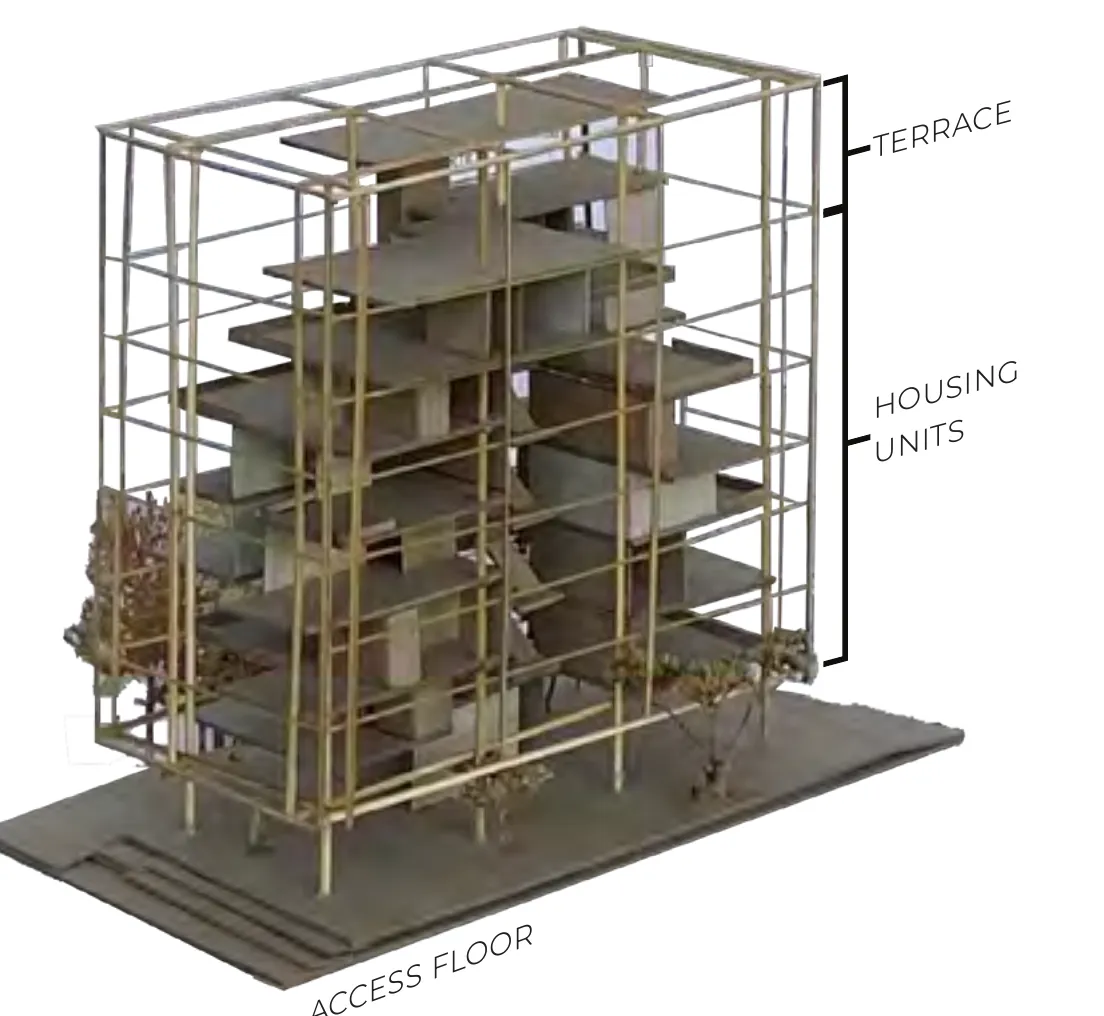
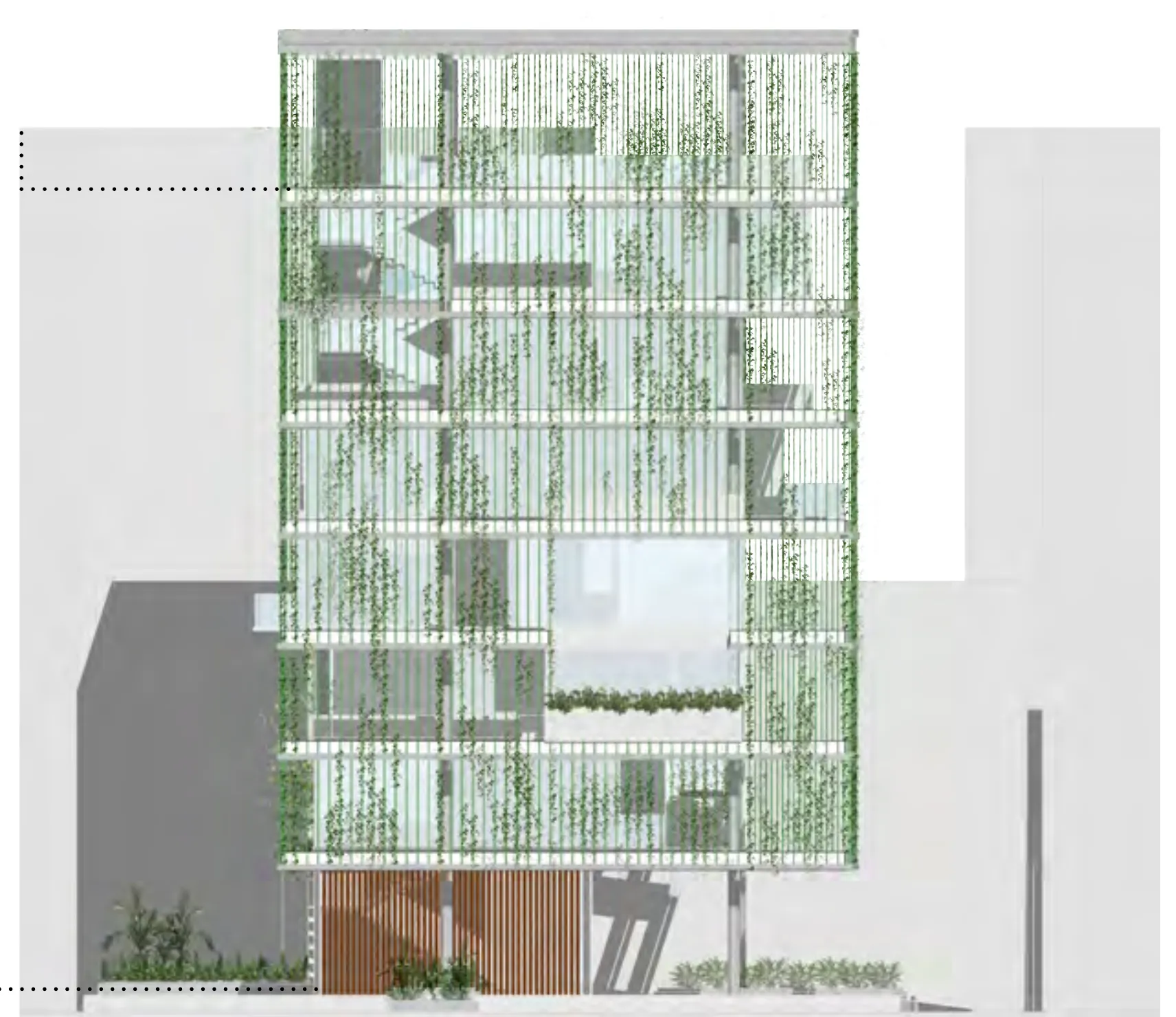
The integration of greenery and vegetation is, therefore, conceptualized as a central part of the proposal, acting as a natural, permeable envelope that surrounds the housing units and creates a canopy for the public passage on the ground floor.
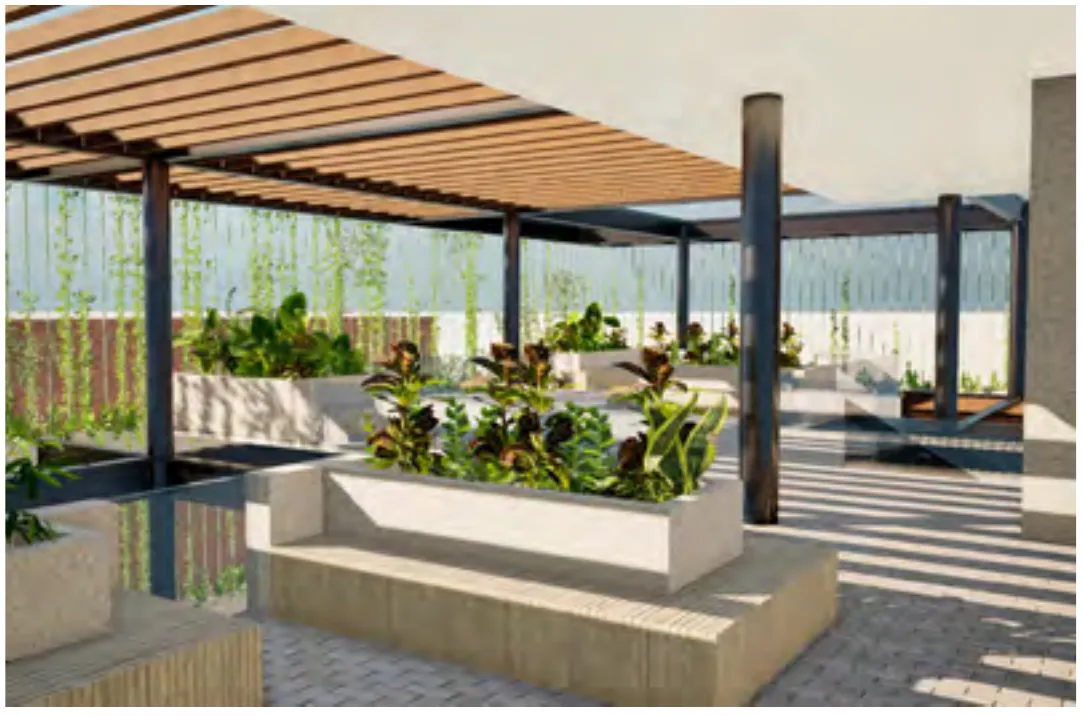
ACCESS AND PUBLIC AREAS
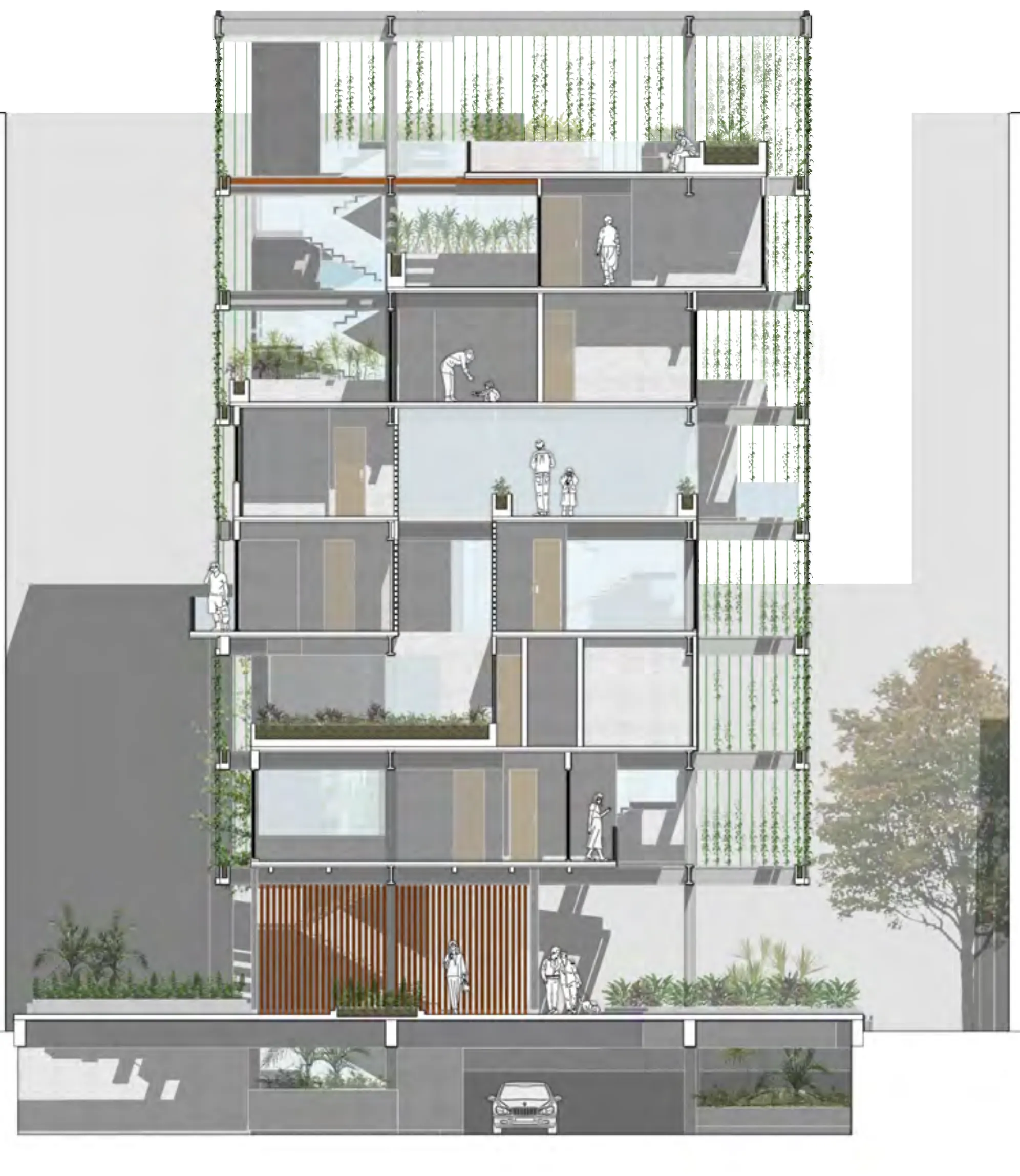
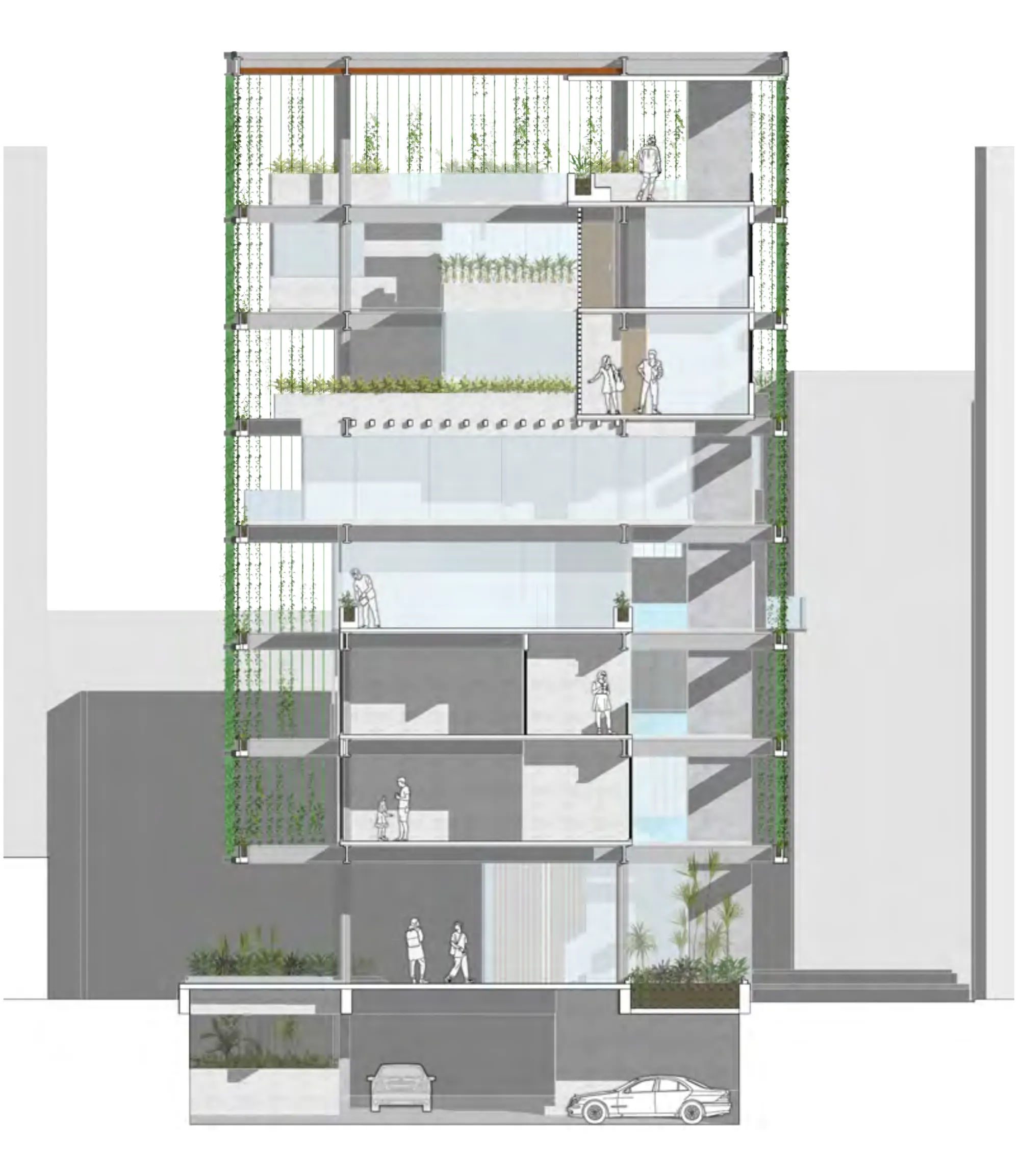
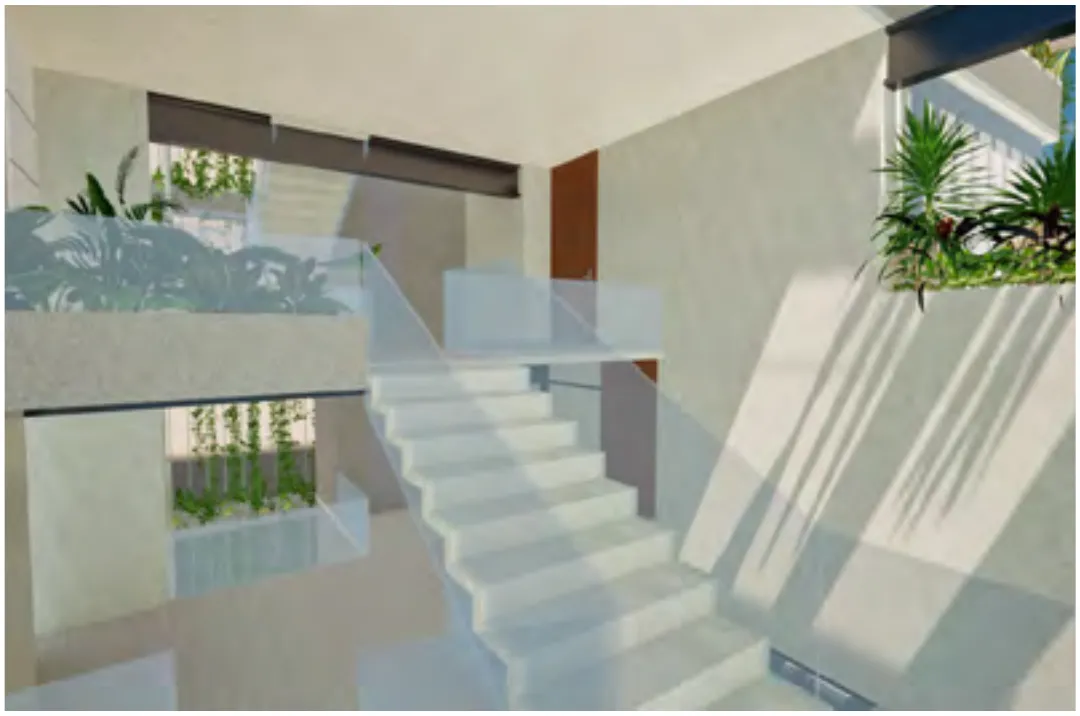
Understanding its condition as a mid-block plot, the circulation is positioned towards the center of the building, leaving ample pedestrian access on the ground floor from both sides of the block.
This layout also allows the apartment units to be oriented towards the main facades, providing both privacy and connectivity by separating each unit with common, transitional spaces that continue towards the rooftop terrace.
DWELLING IN GREENERY
Encased within the greenery, the proposal contemplates thirteen diverse apartment units that explore the interplay between interior and exterior spaces through terraces that interact in different ways with the vegetation that surrounds them.